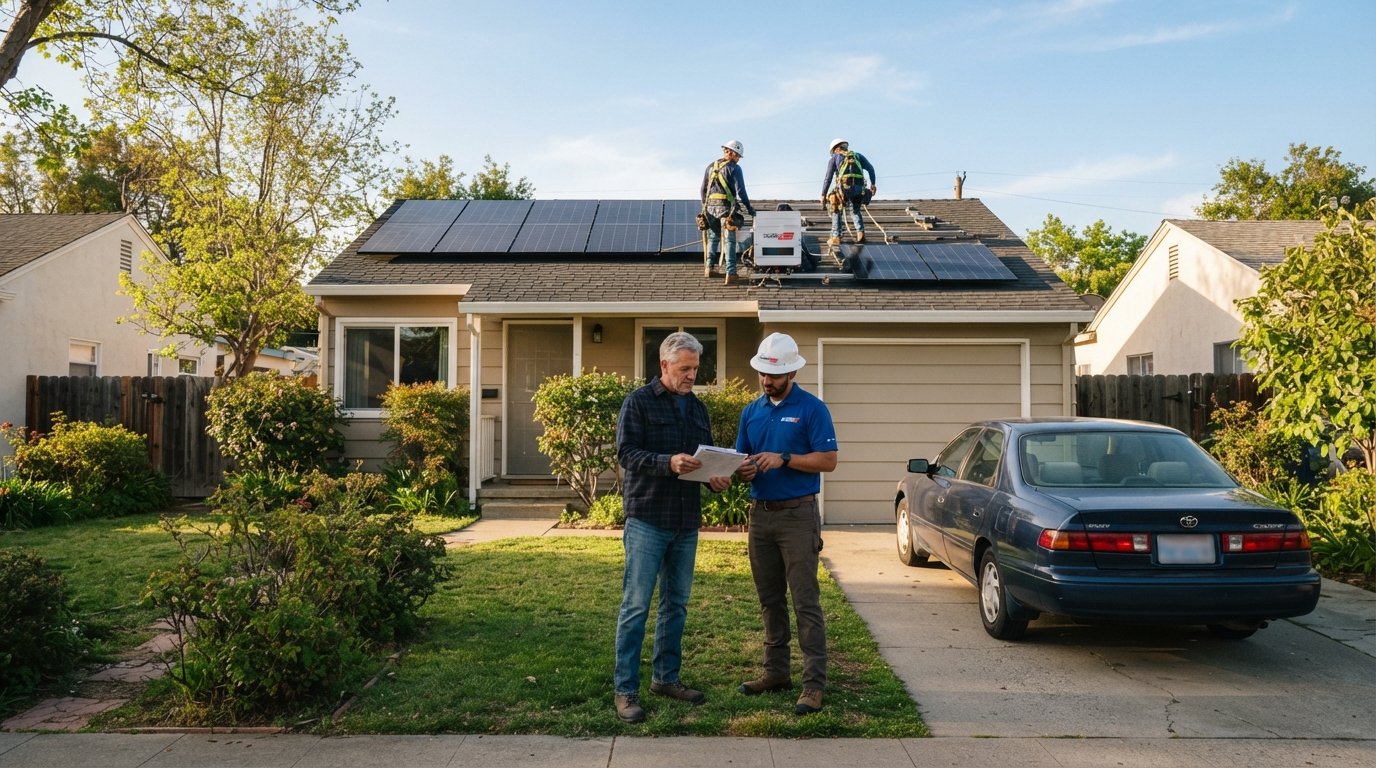
Low Income Solar Financing Programs and Grants in the US
Low income solar financing programs and grants in the United States can cover most costs, letting you install panels with $0 upfront and cut your electric bill.

By Ryan Brooks
Learn more about Solar Panel Installation and Repair for guides, costs, and what to expect.
Compare Solar Panel Installation and Repair Pros Near You

Enter your ZIP code to compare top-rated local professionals and request free quotes.
For millions of American households, the monthly electric bill is not just an expense, it is a source of constant stress. Low income families often spend a disproportionate share of their income on energy, a burden known as a high energy burden. The promise of solar power, with its potential to slash or even eliminate that bill, can feel like a cruel irony when the upfront cost of a system runs into the tens of thousands of dollars. The good news is that this gap between need and affordability is being filled by a growing array of low income solar financing programs and grants in the United States. These initiatives, funded by federal, state, and local governments as well as nonprofit organizations, are designed to make the benefits of renewable energy accessible to everyone, not just the wealthy.
Navigating the landscape of these programs can be complex, but understanding the options is the first step toward energy independence. This guide will walk you through the major categories of assistance, from federal tax credits that can reduce your tax liability to state-backed grant programs and innovative financing models like on-bill repayment. We will also explore how to find and qualify for these opportunities, ensuring you can make an informed decision about your energy future.
Understanding the Landscape of Low Income Solar Assistance
The world of solar incentives is not a single program but a patchwork of support mechanisms. It is crucial to distinguish between a grant, a tax credit, and a financing program, as each affects your wallet differently. A grant is typically a sum of money awarded based on need or other criteria that does not need to be repaid. A tax credit reduces the amount of income tax you owe, but it is only valuable if you have a tax liability to offset. A financing program, such as a low-interest loan or a lease, helps you spread the cost over time but requires repayment.
For low income households, the most transformative programs are often those that combine grants with subsidized financing or eliminate upfront costs entirely. The federal government provides the foundational layer of support through the Residential Clean Energy Credit, which allows you to claim a percentage of the cost of a solar installation as a credit against your federal taxes. While this is not a direct grant, it significantly reduces the net cost of a system. For those who cannot use the full credit, some states and nonprofits offer creative solutions.
State-level programs are where the most targeted assistance for low income families exists. These can include direct rebates, grants, and specialized loan programs. For example, some states offer a higher rebate amount for households below a certain income threshold, effectively acting as a grant. Others have established green banks or energy authorities that provide low-interest financing specifically for income-qualified applicants. Understanding these layers is essential to maximizing the benefit.
Key Federal Programs and Tax Credits
The most significant federal support for solar comes in the form of the Residential Clean Energy Credit, which was extended and expanded by the Inflation Reduction Act. This credit covers a portion of the cost of installing solar panels, battery storage, and other qualifying clean energy equipment. It is a dollar-for-dollar reduction of your federal income tax liability, meaning if you owe $3,000 in taxes and your credit is $3,000, you owe nothing. The credit is non-refundable, so if your tax liability is less than the credit amount, you can carry the unused portion forward to future tax years. This carry-forward provision is particularly important for low income households, as it allows them to benefit from the credit over time.
In addition to the tax credit, the federal government offers other pathways. The Department of Energy (DOE) provides grants to states and municipalities through programs like the Weatherization Assistance Program (WAP). While WAP traditionally focuses on energy efficiency upgrades like insulation and air sealing, some states have expanded their programs to include solar installations for low income homes. These programs are administered locally, so eligibility and availability vary widely by state and even by county.
It is important to note that federal programs are often the backbone, but they are rarely enough on their own to cover the full cost of a solar system for a low income family. They are designed to be combined with state, local, and utility incentives. The key is to stack these benefits to reduce the out-of-pocket expense to a manageable level. For a deeper dive into how solar output prediction can help you maximize your savings once your system is installed, our guide on what is solar output prediction explains how smart energy management can further reduce your bills.
State and Local Grant Programs
Across the United States, states have taken the lead in creating direct grant and rebate programs for low income solar adoption. These programs are often funded through public utility commissions, state energy offices, or dedicated renewable energy funds. The structure of these programs varies, but they generally fall into a few categories: capacity-based rebates, performance-based incentives, and direct grants.
Capacity-based rebates provide a set dollar amount per watt of installed solar capacity. For example, a state might offer $0.50 per watt for the first 5,000 watts, which translates to $2,500 for a 5 kW system. Many of these programs have a higher rebate tier for income-qualified households. Performance-based incentives pay you based on the actual electricity your system produces over time, often over a period of several years. Direct grants are typically needs-based and are awarded through a competitive application process or a lottery system.
To give you a sense of what is available, here are some examples of state-level programs that have been designed with low income households in mind:
- California: The Disadvantaged Communities - Single-family Solar Homes (DAC-SASH) program provides fully subsidized solar installations for qualifying low income homeowners in disadvantaged communities. The program is administered by the California Public Utilities Commission and is funded by utility ratepayers.
- New York: The NY-Sun program offers an affordable solar program with incentives specifically for low-to-moderate income households. It includes a loan program with subsidized interest rates and on-bill repayment options.
- Illinois: The Illinois Solar for All program provides grants and incentives to make solar accessible for low income and environmental justice communities. It includes a job training component and offers fully funded installations for qualifying homes.
- Massachusetts: The Solar Massachusetts Renewable Target (SMART) program includes an add-on incentive for low income customers, increasing the compensation for solar energy production.
- Colorado: The Colorado Energy Office offers the Weatherization Assistance Program, which in some counties can be combined with solar grants for low income households.
These are just a few examples. The availability and specifics of these programs change frequently, so it is essential to check with your state energy office or public utility commission for the most current information. Many of these programs are oversubscribed and have waitlists, so applying early is often beneficial.
Innovative Financing Models for Low Income Households
For many families, a grant or tax credit alone does not solve the affordability problem because they still cannot cover the upfront cost. This is where innovative financing models come into play. These models are designed to remove the barrier of the initial investment, allowing homeowners to pay for solar over time through their utility bill or property taxes.
One of the most promising models is on-bill repayment (OBR). In an OBR program, a utility or a third-party lender provides the upfront capital for a solar installation, and the homeowner repays the loan through a charge on their monthly utility bill. The repayment amount is often set to be less than or equal to the savings on the electric bill, meaning the homeowner sees immediate net savings. Because the repayment is tied to the utility meter, it can transfer to the next homeowner if the property is sold, reducing the risk for lenders and making them more willing to lend to low income households.
Another model is Property Assessed Clean Energy (PACE) financing. PACE allows homeowners to borrow money for solar and other energy improvements and repay it through an assessment on their property tax bill. While PACE has faced challenges in some states and with federal housing agencies, it remains a viable option in many areas. For low income households, PACE can be attractive because it does not require a high credit score, and the repayment obligation transfers with the property.
Solar leases and power purchase agreements (PPAs) are another route. In a lease, you pay a monthly fee to rent the solar system. In a PPA, you agree to buy the electricity produced by the system at a set rate, usually lower than the utility rate. These options typically require little to no money down and can be a good fit for low income households that cannot use the federal tax credit. However, it is important to read the fine print, as leases and PPAs can have escalating payments and may complicate the sale of your home.
How to Find and Apply for Programs
The process of finding and applying for low income solar programs can feel daunting, but breaking it down into steps makes it manageable. The first step is to determine your eligibility. Most programs have income limits based on the Area Median Income (AMI) or a percentage of the federal poverty level. You will typically need to provide proof of income, such as pay stubs, tax returns, or a letter from a social services agency.
Once you have a sense of your eligibility, the next step is to research the specific programs available in your state and utility territory. A good starting point is the Database of State Incentives for Renewables and Efficiency (DSIRE), which provides a comprehensive list of incentives by state. You can also contact your state energy office, your local utility company, and nonprofit organizations like GRID Alternatives, which specializes in low income solar installations.
Here is a practical framework for navigating the application process:
- Gather your documents: Collect recent utility bills, proof of income for all household members, and identification. Having these ready will speed up any application.
- Contact your utility and state energy office: Ask specifically about low income solar programs, rebates, and financing options. Be persistent, as these programs can be less publicized.
- Get multiple quotes: If you qualify for a grant or financing, you will still need to choose a solar installer. Get quotes from at least three reputable companies and compare not just the price but also the equipment, warranties, and customer reviews.
- Work with a solar advocate: Nonprofits and local solar advocates can help you understand your options and navigate the paperwork. They can also help you avoid predatory lenders.
- Apply early and follow up: Many programs have limited funding and are first-come, first-served. Submit your application as soon as possible and follow up regularly to check on its status.
When you are ready to find a qualified installer, you can use platforms like FreeSolarPowerQuotes to receive no-obligation quotes from vetted solar providers in your area. This can save you time and help you compare offers side by side.
Maximizing Your Savings and Avoiding Pitfalls
Once you have secured a grant or financing, the focus shifts to maximizing the long-term savings of your solar investment. The amount you save depends not only on the size of your system but also on how you use energy in your home. Smart energy management, including the use of smart thermostats and appliances, can further reduce your consumption and increase the percentage of your bill that is offset by solar.
It is also critical to be aware of potential pitfalls. Some unscrupulous lenders target low income households with high-interest loans or complex leases that erode the savings. Always read the terms carefully and never sign a contract you do not fully understand. Be wary of any offer that guarantees you will pay nothing and get free solar, as this is often a red flag for a predatory scheme. Legitimate programs will be transparent about costs, savings estimates, and the terms of repayment.
Finally, remember that the incentives landscape is constantly changing. Federal tax credits, state rebates, and utility programs are subject to legislative and regulatory shifts. The information in this article is a starting point, but you should always verify the current details with official sources before making a financial commitment. By doing your research and leveraging the available low income solar financing programs and grants in the United States, you can take control of your energy costs and contribute to a cleaner, more sustainable future.