Home Solar Power: Save on Bills and Gain Energy Independence
Have you watched your electricity bill climb higher each year? You’re not alone. Many homeowners are tired of unpredictable utility costs and are looking for a reliable solution. Solar energy offers a powerful way to reduce those monthly bills and become less dependent on the traditional power grid. It’s a practical investment in your home’s future and your financial peace of mind.
Understanding Solar Energy
Solar energy is simply the conversion of sunlight into electricity you can use in your home. This process happens through solar panels, which are installed on your roof or property. These panels capture photons from sunlight and generate direct current (DC) electricity.
An inverter then converts that DC electricity into the alternating current (AC) that powers your appliances and lights. Any extra electricity your system produces can often be sent back to the grid for credit, a process called net metering. It’s a clean, silent, and remarkably straightforward technology.
What Are Solar Panels Made Of?
Most residential solar panels are made from silicon cells, a material that naturally reacts to sunlight. These cells are protected by a glass casing and framed for durability. The entire system is designed to withstand weather for decades, requiring very little maintenance from you.
Why Solar Energy Is Becoming More Popular
The primary driver for most homeowners is financial. Electricity rates have a history of rising, while the cost of solar panels has dropped dramatically. This creates a perfect opportunity to lock in a lower, predictable cost for your energy for years to come.
Beyond savings, there’s a growing desire for energy independence and environmental responsibility. Generating your own power means you’re less vulnerable to grid outages and price spikes. You’re also directly reducing your household’s carbon footprint, which is a powerful motivator for many families.
If you are considering solar power for your home, comparing installation quotes can help you understand your options. Request a free solar quote or call to learn more.
Common Questions Homeowners Have About Solar
It’s normal to have questions before making a significant home upgrade. The good news is that solar technology is mature, and many common concerns have clear answers. A reputable installer will gladly address all your questions during a consultation.
Cost is often the first hurdle, but with various financing options and generous incentives, solar is more accessible than ever. People also wonder if their roof is suitable or if they get enough sun. Most homes in sunny areas are excellent candidates, and a professional assessment can give you a definitive answer.
- How much do solar panels cost, and what are my financing options?
- Is my roof suitable for solar panels?
- What happens on cloudy days or at night?
- How long will the installation process take?
- Will solar panels increase my property taxes or home insurance?
- What maintenance is required for a solar system?
How Solar Panel Installation Works
The installation process is handled by professionals from start to finish. It’s designed to be smooth and minimally disruptive to your daily life. From the initial assessment to flipping the switch, your installer manages the details.
The process typically follows a logical sequence. It begins with understanding your energy needs and ends with you generating clean power. For a deeper look at what to expect from installers, our guide on understanding solar energy quotes breaks down the key components.
- Home Energy Assessment: An expert evaluates your roof, electricity usage, and goals.
- System Design & Proposal: A custom solar plan is created for your home.
- Permits & Approvals: Your installer handles all necessary paperwork with your city and utility company.
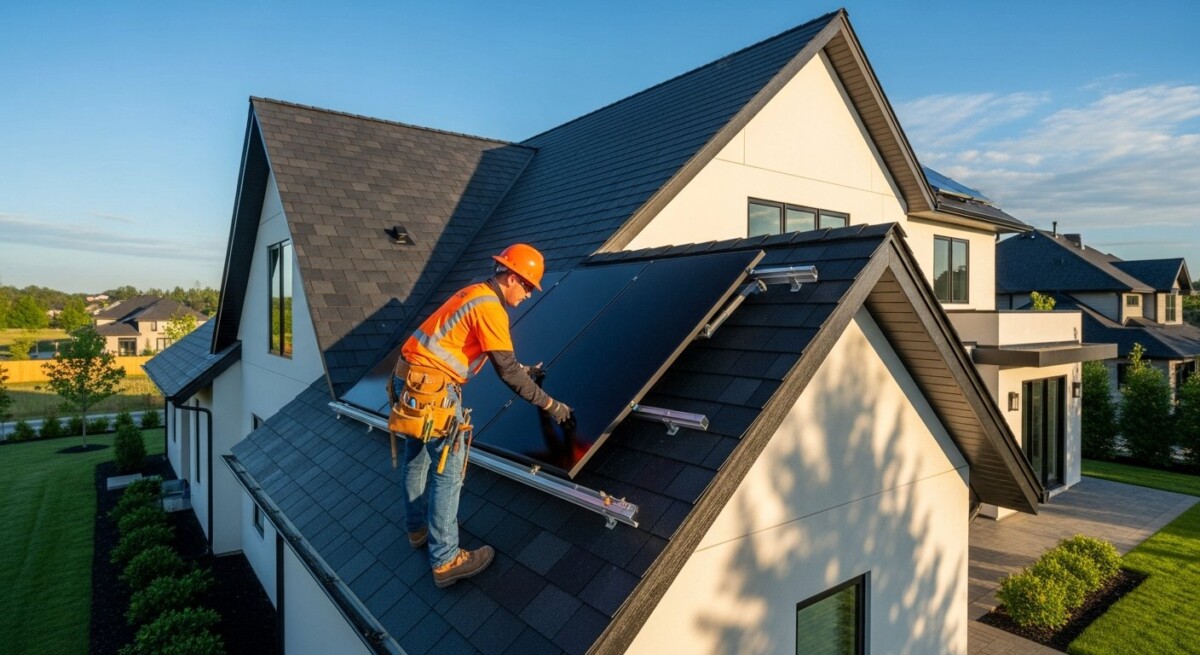
- Panel Installation: The racking, panels, and inverter are securely installed.
- Inspections & Activation: After final approvals, your system is connected and turned on.
Speaking with experienced installers can help you determine the best solar solution for your home. Compare solar quotes here or call to explore available options.
Signs Your Home May Be Ideal for Solar
Certain conditions make a home particularly well-suited for solar panels. The most obvious factor is access to strong, unobstructed sunlight for most of the day. A south-facing roof is often ideal, but east and west-facing roofs can also work very well.
Your current energy habits also play a big role. If you have high electricity bills, you have more potential savings to capture. Homeowners who plan to stay in their homes for the long term will see the greatest return on their solar investment.
- Your roof gets direct sunlight for at least 5-6 hours per day.
- You have high or rising monthly electricity bills.
- Your roof is in good condition and has ample, unshaded space.
- You plan to own your home for 5+ years.
- You live in an area with strong net metering policies.
- You are interested in reducing your environmental impact.
What Affects Solar Installation Costs
The total cost of your solar system depends on several key factors. The size of the system, measured in kilowatts (kW), is the biggest determinant. A larger system for a big home with high usage will cost more than a smaller one, but it will also generate greater savings.
Equipment quality, roof complexity, and local labor rates also influence the price. Crucially, you must subtract available government incentives, like the federal solar tax credit, and any local rebates. These can reduce your net cost by 30% or more, making the investment much more attractive.
The cost of solar installation varies depending on your home and energy needs. Request personalized solar quotes or call to see what options are available.
Tips for Choosing a Reliable Solar Installer
Your installer is your partner in this process, so choosing a reputable company is crucial. Look for established companies with a strong track record in your community. They should be licensed, insured, and offer robust warranties on both equipment and workmanship.
Always check customer reviews and ask for references. A trustworthy installer will provide a detailed, transparent quote and won’t use high-pressure sales tactics. Getting multiple quotes is the single best way to ensure you get a fair price and a quality design. This is where understanding the details of solar quotes becomes so valuable.
- Choose an installer with several years of local experience.
- Verify licenses, insurance, and certifications.
- Read customer reviews and ask for local references.
- Compare the warranties offered on equipment and labor.
- Get detailed quotes from at least three different companies.
- Ensure they handle all permitting and utility interconnection.
Long-Term Benefits of Installing Solar Panels
The long-term advantages of solar power extend far beyond the initial installation. The most immediate benefit is dramatically lower electricity bills, often reducing them by 70-100%. This creates predictable energy costs for 25 years or more, shielding you from rising utility rates.
Solar panels also increase your home’s market value and make it more attractive to buyers. You gain a degree of energy independence and contribute directly to a cleaner environment. It’s a tangible upgrade that pays for itself over time and then continues to deliver pure savings. To see how this integrates into daily life, explore how we use solar energy every day in modern homes.
How long do solar panels last?
Most quality solar panels come with a 25-year performance warranty, guaranteeing they will still produce at a high capacity after decades. The system itself often continues to generate electricity well beyond that timeframe, making it a truly long-term asset for your home.
Do solar panels work in winter?
Yes, solar panels work in cold and even snowy climates. They generate electricity from sunlight, not heat. In fact, they can be more efficient in cooler temperatures. Snow usually slides off angled panels, and any energy production on sunny winter days is a bonus.
What is net metering?
Net metering is a billing arrangement with your utility company. When your solar panels produce more electricity than you use, the excess is sent to the grid. Your meter runs backward, giving you a credit. You then use these credits to offset power you draw from the grid at night or on cloudy days.
Can I go off-grid with solar panels?
While possible, going completely off-grid requires a very large solar array and expensive battery storage for nights and long cloudy periods. Most homeowners choose a grid-tied system with net metering, as it’s far more cost-effective while still providing significant independence.
What financing options are available?
You can purchase your system outright for the highest long-term savings, take out a solar loan (often with $0 down), or enter a lease or Power Purchase Agreement (PPA). Each option has different implications for ownership, incentives, and savings, which a good installer can explain.
How do I maintain my solar panels?
Solar systems require very little maintenance. Rainfall usually cleans the panels sufficiently. You may want to hose them down if there’s heavy dust or pollen. It’s also wise to have your installer do a periodic check to ensure all connections and components are functioning optimally.
Exploring solar energy for your home is a smart step toward controlling costs and investing in a sustainable future. The technology is proven, the financial benefits are clear, and the process is simpler than you might think. Your next best step is to gather information tailored to your specific home. By comparing detailed quotes from trusted local installers, you can make a confident, informed decision that will benefit your household for decades.