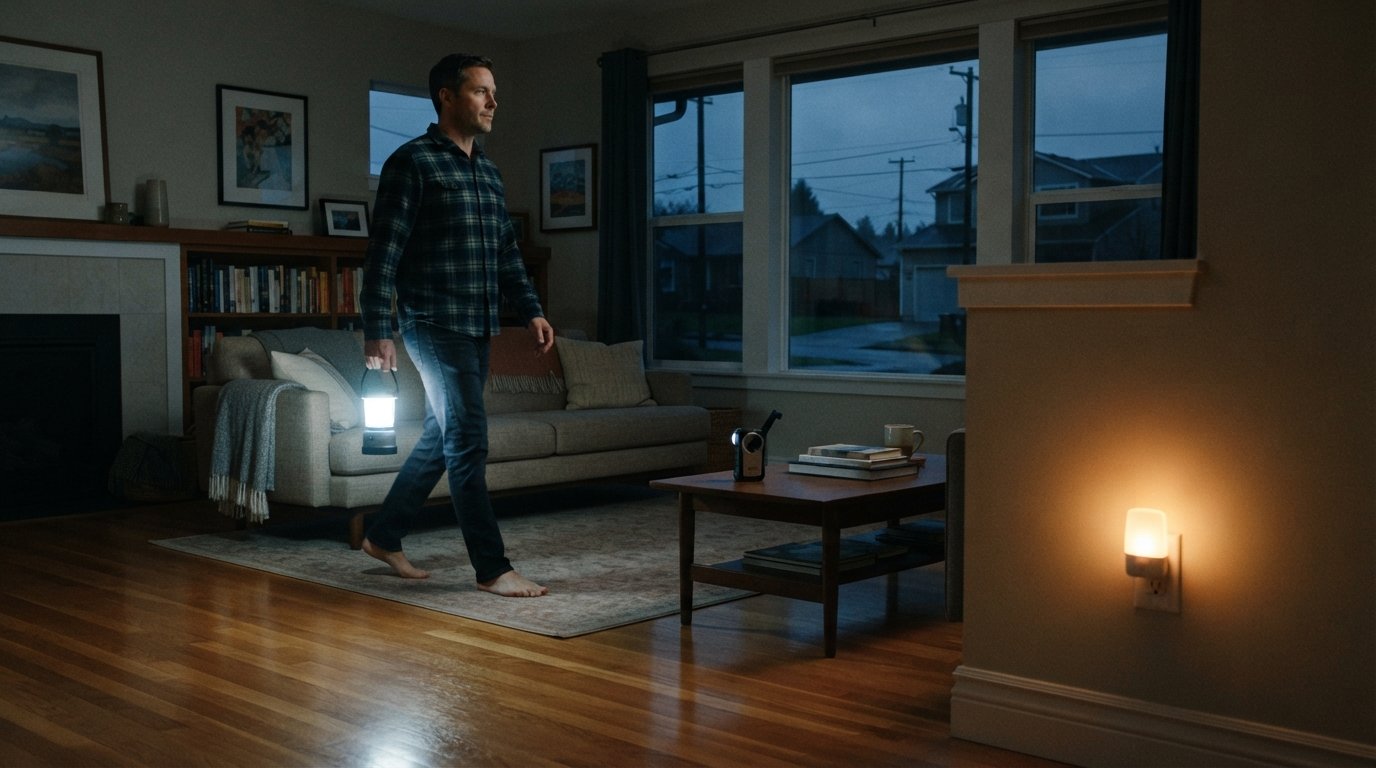
Emergency Lighting for Home Power Outage: 10 Reliable Options
Discover the best emergency lighting for home power outage scenarios, from plug-in auto lights to solar lanterns, to keep your family safe and comfortable.

By Mason Carter
Find Local Pros Near You

Enter your ZIP code to compare top-rated local professionals and request free quotes.
When the grid goes down, the first few seconds of darkness can be disorienting, even dangerous. Whether it is a summer storm, a winter freeze, or an infrastructure failure, losing power is a stark reminder of how much we depend on electricity. The immediate challenge is not just comfort; it is safety. Navigating a dark hallway to find a flashlight or checking on family members without lighting can lead to falls, injuries, and panic. This is why planning your emergency lighting for home power outage scenarios is a critical part of household preparedness. You need a strategy that goes beyond a single flashlight under the bed, one that provides ambient light for living spaces, task lighting for essential activities, and safe passage through your home.
A well-designed emergency lighting plan does not require a generator or a commercial-grade system. In fact, the most effective solutions are often simple, portable, and ready to deploy within seconds. The goal is to create a layered approach: a mix of always-on backup lights, rechargeable task lights, and long-duration options that can carry you through extended outages. As we explore the best options, we will focus on practicality, cost, and usability, ensuring that when the lights go out, you are not left in the dark.
Assessing Your Home Lighting Needs
Before you purchase any equipment, take a walk through your home and identify the critical zones. Think about the path from your bedroom to the bathroom, the location of your first aid kit, and the area where you keep your emergency supplies. These are the high-traffic areas where a tripping hazard is most likely. Similarly, consider where you will need to perform specific tasks during an outage, such as cooking on a camp stove, reading instructions, or administering medication. Each of these areas requires a different type of light source.
For example, a stairway needs a hands-free, motion-activated light to prevent falls, while your kitchen counter needs a focused, bright task light. A living room might benefit from a soft, ambient lantern that mimics a table lamp, creating a sense of normalcy. By mapping out these zones, you can avoid the common mistake of buying multiple identical flashlights that you will have to hold in your mouth or juggle while working. This assessment informs your purchasing decisions and ensures that your emergency lighting for home power outage plans are tailored to your family's specific layout and habits.
Battery-Powered Solutions: The First Line of Defense
Battery-powered lighting is the backbone of most home preparedness plans. These devices are versatile, require no installation, and can be stored anywhere. The key is to choose devices that are energy-efficient, bright enough for their intended purpose, and powered by batteries that you can easily replace or recharge. When shopping, look for LED technology, which provides maximum brightness with minimal battery drain, extending your runtime significantly compared to older incandescent bulbs.
Within this category, there are two main sub-types: those that use disposable batteries (like AA or D cells) and those with built-in rechargeable batteries. Disposable battery lights are reliable for long-term storage because they do not lose their charge over time as quickly as some rechargeables. However, they require you to keep a stock of batteries on hand. Rechargeable lights are more cost-effective in the long run and often feature USB ports, allowing you to charge them from a power bank, your car, or a solar panel. A robust strategy involves using both types, ensuring you have a charged device ready immediately and a backup that still has fresh alkaline batteries.
Flashlights vs. Lanterns
The distinction between a flashlight and a lantern is simple: one directs light in a beam, the other disperses it in all directions. For emergency lighting for home power outage, you need both. A flashlight is essential for moving around, checking the fuse box, or looking for supplies in a closet. A lantern, however, is the better choice for lighting up a room. When placed on a table, a lantern can illuminate a 10x10 foot space effectively, allowing multiple people to read, play games, or eat dinner together. Many modern lanterns are collapsible, making them compact for storage, and include hooks for hanging from a ceiling fan or door frame.
When selecting a lantern, pay attention to its lumen output. A lantern with 200-400 lumens is sufficient for ambient room lighting. If you need to light up a larger area or a workspace, look for something in the 500-800 lumen range. Additionally, consider models with a dimmer switch. Being able to lower the brightness not only saves battery but also creates a less harsh, more comfortable environment for winding down at night. A dim red light mode is also a valuable feature, as it preserves your night vision and is less disruptive to others sleeping.
Plug-In Emergency Lights: Always Ready to Illuminate
One of the most effective solutions for emergency lighting for home power outage is a plug-in emergency light. These devices are designed to stay plugged into a standard wall outlet permanently. They have a built-in battery that remains charged while the power is on. When the grid fails, a sensor detects the loss of power and automatically turns on the light, providing instant illumination without you needing to do anything. This is particularly useful for hallways, staircases, and entryways, ensuring that your escape routes are always lit.
These units are incredibly affordable, often costing less than $20 each, and they pay for themselves the first time they activate during an outage. The installation is as simple as plugging them in. However, it is important to place them strategically. Do not hide them behind furniture or curtains. Instead, place them in outlets that are easily visible from your bed or your main seating area. Some models come with a detachable flashlight head, allowing you to unplug the light from its base to use as a handheld device, offering a two-in-one solution that is both a fixed safety light and a portable tool.
Rechargeable Power Stations and Solar Generators
For homeowners looking to elevate their preparedness, a portable power station is a game-changer. These units are essentially large batteries with multiple output ports (AC outlets, USB-C, USB-A, and 12V carports). They can power not just lights, but also your smartphone, laptop, a small TV, or even a CPAP machine. While they are more expensive than a simple lantern, they offer a level of energy security that smaller devices cannot match. You can recharge them from a wall outlet before a storm, from your vehicle's cigarette lighter, or using a portable solar panel during a prolonged outage.
When it comes to lighting, a power station allows you to use your existing LED lamps and string lights. Instead of buying specialized emergency gear, you can plug in a standard floor lamp or a set of USB-powered LED strip lights. This makes the experience feel much more normal. If you have a solar panel setup, this becomes a truly sustainable solution. In fact, understanding how these systems integrate with your home is key. If you are considering a more permanent solar installation, you might wonder about its capabilities during an outage. Our guide on whether solar panels work during a power outage explains the critical difference between grid-tied and battery-backed systems, which is essential knowledge for any homeowner.
The size of the power station you need depends on your goals. A small 300Wh unit can run a 10W LED light for 30 hours or charge your phone several times. A larger 1000Wh unit can power a mini-fridge for several hours as well as your essential lighting. For most homes, a mid-sized unit (500-700Wh) provides a perfect balance of cost and capability for emergency lighting and device charging. This investment not only covers lighting but also keeps your communication lines open, which is crucial for receiving updates and contacting help.
Solar-Powered Lights: Harnessing the Sun for Nighttime Safety
Solar-powered lights are an excellent addition to your emergency kit, especially for outdoor security or as a free-to-run indoor option. The most common types are small garden lights with a stake and an integrated solar panel. During the day, they charge their internal batteries; at night, they automatically turn on. While they are typically used for landscaping, you can bring them inside during an outage and place them on a windowsill to charge during the day, then use them to illuminate a room at night. They are not as bright as dedicated lanterns, but they are a great zero-cost backup that requires no grid connection.
For a more robust indoor solution, consider purchasing a portable solar lantern that is designed for camping. These units have a larger solar panel and a more powerful battery than garden lights. They are often collapsible and feature multiple brightness settings. By placing one or two of these on a sunny windowsill, you can build up a reserve of light energy without consuming any electricity. This approach is particularly useful for extended outages, as it decouples you from the grid entirely, provided the sun shines. This ties into the broader concept of energy independence, a key benefit of the renewable energy ecosystem that sites like NewSolarQuotes help homeowners explore.
Smart Lighting and Battery Backup Systems
If you are building a smart home, your lighting can be integrated into your emergency plan. Smart bulbs and smart plugs can be programmed to turn on or off at specific times or in response to triggers. However, during a power outage, your Wi-Fi network is often down, rendering these devices unresponsive unless they are connected to a UPS (Uninterruptible Power Supply) for your router. A more practical approach is to install smart bulbs that have a battery backup built-in. These bulbs work like standard smart lights but contain a small battery that allows them to function as a normal dim light for a few hours when the power cuts out.
Another advanced option is a hardwired emergency lighting system, similar to those used in commercial buildings. These are typically installed by an electrician and are connected to a central battery unit. While this is a significant investment, it provides the ultimate peace of mind, turning on critical lights throughout the home automatically. For most homeowners, this is overkill, but it is worth mentioning for those building a new home or doing a major renovation. For existing homes, the plug-in units we discussed earlier offer 90% of the benefit at 5% of the cost.
Creating a Lighting Kit and Maintenance Routine
Once you have selected your devices, the most important step is organization. Do not scatter your lights throughout the house without a plan. A central emergency kit is essential. Here are the key components to include to ensure your lighting is ready to go:
- One high-lumen flashlight with fresh batteries in a designated drawer near your bed.
- Two LED lanterns (one for the main living area, one for the kitchen) with a set of spare batteries taped to the bottom.
- At least two plug-in emergency lights installed in high-traffic corridors.
- A headlamp for each family member to keep hands free for carrying children or holding railings.
- Several small USB-powered LED lights that can be charged from a power bank or laptop.
It is not enough to just buy this gear; you must maintain it. Create a schedule to test your equipment. Every month, turn on your flashlights and lanterns to ensure they work. Check the charge level of your rechargeable power stations every three months and top them off. Every six months, replace the batteries in your flashlights and plug-in emergency lights, even if they have not been used, to prevent corrosion and leakage. Mark these dates on your calendar. A light that does not work during a blackout is just a piece of plastic, so routine checks are non-negotiable for a reliable emergency lighting for home power outage strategy.
Finally, consider the placement of your power station. Store it in a location that is easily accessible but not in a high-traffic area where it could be knocked over. Keep it charged and ready. A good practice is to charge it fully after every use or every two to three months. By integrating these habits into your home routine, you ensure that when the lights go out, your home remains a safe and navigable sanctuary, allowing you to wait out the storm with confidence and comfort.
Being prepared is not about fear; it is about resilience. By investing a small amount of time and money in a layered lighting strategy, you transform a potential crisis into a manageable inconvenience. You ensure that your family is safe, comfortable, and informed, no matter what the grid brings. When the power returns, you will be glad you took the steps to be ready.