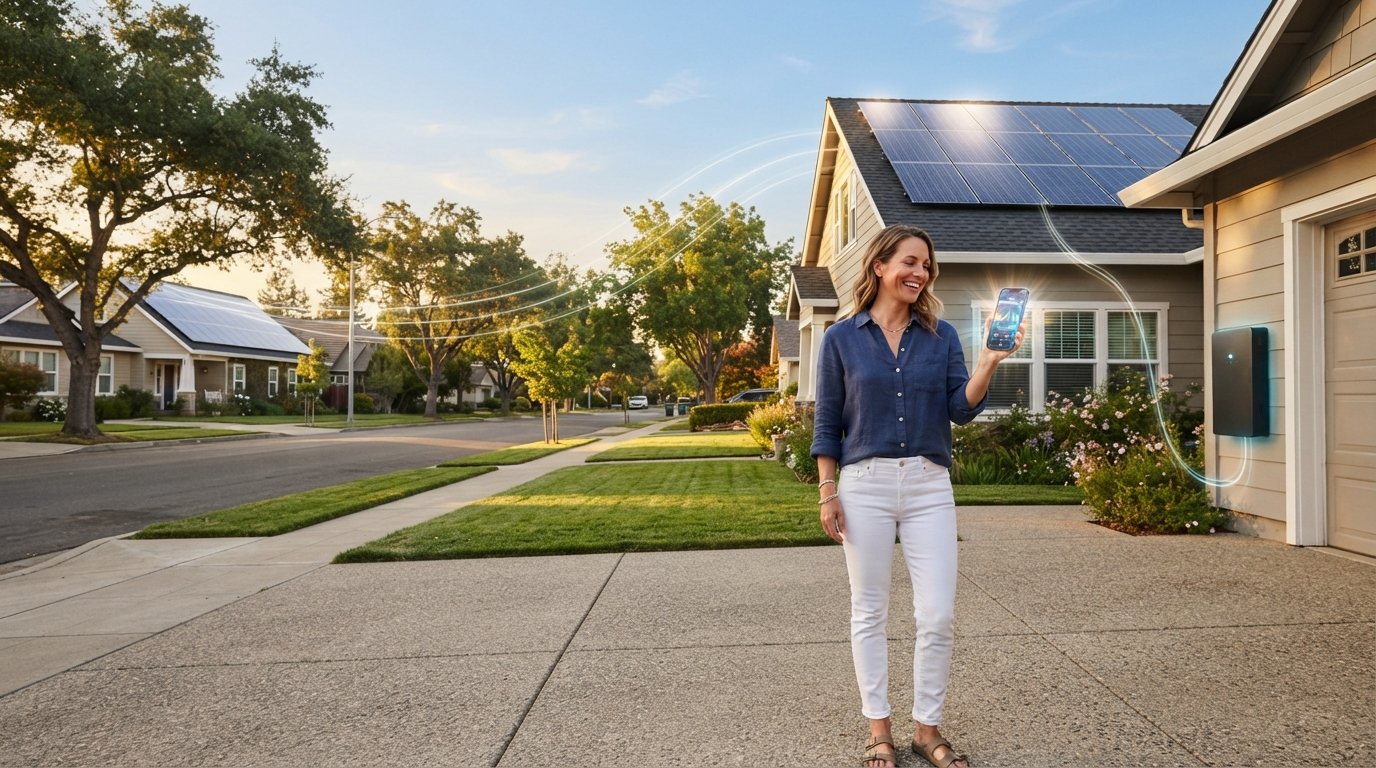
Blockchain Peer to Peer Solar Energy Trading Explained
Blockchain peer to peer solar energy trading explained: how homeowners sell surplus power directly to neighbors and boost solar returns.

By Dylan Harris
Learn more about Solar Panel Installation and Repair for guides, costs, and what to expect.
Compare Solar Panel Installation and Repair Pros Near You

Enter your ZIP code to compare top-rated local professionals and request free quotes.
Imagine waking up, checking your phone, and seeing that your rooftop solar panels have not only covered your home's electricity needs but also earned you $12 overnight by selling surplus power directly to a neighbor three streets away. No utility middleman. No lengthy billing cycle. Just a transparent, automated transaction recorded on a shared digital ledger. This is not a futuristic fantasy. It is the core promise of blockchain peer to peer solar energy trading, a rapidly maturing model that is reshaping how homeowners, businesses, and communities think about power generation and distribution.
For decades, the electric grid has operated as a one way street: utilities generate power, and consumers buy it. Rooftop solar added a wrinkle by letting homeowners generate their own electricity, but excess energy typically flows back to the utility under net metering agreements that vary wildly by state and are increasingly under pressure. Blockchain peer to peer solar energy trading offers an alternative: a decentralized marketplace where solar producers and consumers transact directly, with blockchain providing the trust, transparency, and automation needed to make it work at scale.
What Is Blockchain Peer to Peer Solar Energy Trading?
At its foundation, blockchain peer to peer solar energy trading combines two powerful technologies: distributed ledger technology (blockchain) and distributed energy resources (rooftop solar, batteries, and smart meters). The blockchain acts as a secure, immutable record of every energy transaction, while the solar assets generate the actual electricity. When one household produces more solar power than it needs, the surplus can be sold to a neighbor, a local business, or even a community microgrid, all without a traditional utility acting as intermediary.
The term "peer to peer" here means exactly what it sounds like: transactions happen directly between participants. A homeowner with excess solar generation becomes a seller. A nearby apartment dweller without roof access becomes a buyer. The blockchain validates and records the trade, smart contracts automatically execute payment and delivery terms, and the physical electricity flows through existing grid infrastructure or localized microgrids. This model is sometimes called transactive energy, and it represents a fundamental shift from centralized to decentralized power systems.
What makes blockchain uniquely suited to this task is its ability to solve the trust problem. In a traditional transaction, a bank or utility verifies that the seller has the goods and the buyer has the funds. In a peer to peer energy market, thousands of small transactions happen simultaneously across a distributed network. Blockchain provides a single source of truth that all participants can trust without a central authority. Every kilowatt hour traded is recorded, time stamped, and verifiable, which builds confidence among participants and regulators alike.
How Blockchain Peer to Peer Solar Energy Trading Works Step by Step
Understanding the mechanics helps demystify the technology. While implementations vary by platform and region, the general process follows a consistent pattern. Here is how a typical transaction unfolds from start to finish.
- Solar generation and metering: A homeowner's solar panels produce electricity. A smart meter continuously measures how much energy is generated, how much the home consumes, and how much surplus is available for sale.
- Listing the surplus: The smart meter or an associated app automatically lists the surplus energy on a peer to peer marketplace. The seller sets a price, or the platform suggests one based on real time supply and demand.
- Buyer matching: A nearby consumer (perhaps a renter, a small business, or another homeowner with insufficient solar capacity) browses available energy listings or has a standing order to purchase a certain amount at a certain price.
- Smart contract execution: Once a match is made, a smart contract (a self executing agreement coded on the blockchain) locks in the terms: quantity, price, delivery time, and payment method.
- Energy delivery and settlement: The agreed upon electricity flows through the grid or microgrid to the buyer. The smart contract automatically transfers payment from the buyer's digital wallet to the seller's, and the transaction is permanently recorded on the blockchain.
This entire process can happen in seconds, often without any human intervention beyond initial setup. The efficiency gains are substantial compared to traditional utility billing, which can take weeks to settle and involves multiple intermediaries. For homeowners, the appeal is clear: you become an active participant in the energy economy rather than a passive ratepayer.
It is worth noting that the physical delivery of electricity still relies on wires and grid infrastructure in most cases. Blockchain does not replace the grid; it adds a layer of coordination and trust that enables more granular, localized trading. In some pilot projects, microgrids with their own distribution lines allow completely off grid peer to peer trading, but these are currently the exception rather than the rule.
Key Benefits for Homeowners and Communities
The shift toward decentralized energy trading offers tangible advantages that go beyond feel good environmentalism. For homeowners who have invested in solar panels and battery storage, peer to peer trading can dramatically improve the return on investment. Instead of exporting surplus power to the utility at wholesale rates (often just a few cents per kilowatt hour), you can sell directly to neighbors at retail or near retail prices, capturing far more value from every electron your panels produce.
Community level benefits are equally compelling. When neighbors trade energy with each other, money stays local rather than flowing to distant utility shareholders. This creates a more resilient local economy and strengthens social ties. In areas prone to grid outages, peer to peer networks paired with battery storage can keep critical loads powered when the broader grid goes down. Participants in such networks often report a greater sense of energy independence and control over their household budgets.
From an environmental perspective, peer to peer trading accelerates renewable adoption by making solar more financially attractive. When homeowners can earn higher returns from their surplus energy, the payback period for a solar installation shrinks. That makes solar accessible to more households, including those who might otherwise be deterred by upfront costs. As more households adopt solar, demand for fossil fuel generation declines, reducing overall carbon emissions.
Blockchain also introduces a level of transparency that traditional energy markets lack. Every transaction is recorded on a public or permissioned ledger, meaning participants can verify that the energy they purchased was genuinely generated from renewable sources. This traceability is increasingly important for businesses that need to report their carbon footprint or meet sustainability goals.
Challenges and Limitations of Blockchain P2P Energy Trading
Despite its promise, blockchain peer to peer solar energy trading faces real obstacles. Regulatory frameworks in most U.S. states were not designed for decentralized energy markets. Utilities are often resistant because peer to peer trading threatens their traditional business model. In some jurisdictions, selling electricity to a neighbor without a utility license is legally ambiguous or outright prohibited. Pilot projects have often required special waivers or regulatory sandboxes to operate.
Technical challenges also exist. Blockchain networks consume energy, and while newer consensus mechanisms like proof of stake are far more efficient than proof of work, the energy footprint of the digital ledger itself must be weighed against the environmental benefits of the energy being traded. Scalability is another concern: public blockchains can become congested and slow when transaction volumes spike, which is problematic for real time energy markets.
Consumer adoption presents a third hurdle. Most homeowners are not familiar with blockchain wallets, private keys, or smart contracts. Platforms must abstract away these complexities and provide user experiences as simple as a typical banking app. That requires significant investment in interface design and customer education. Finally, the hardware requirements, smart meters, internet connectivity, and sometimes battery storage, can exclude lower income households who might benefit most from lower energy costs.
Interoperability is another ongoing issue. Different blockchain platforms, meter manufacturers, and utility systems often do not communicate seamlessly. Industry groups are working on standards, but widespread adoption will take time. For now, most peer to peer energy projects operate as isolated pilots rather than interconnected regional markets.
Real World Examples and Pilot Projects
Despite the challenges, blockchain peer to peer solar energy trading has moved from whitepapers to real world deployments. In Brooklyn, New York, the TransActive Grid project allowed neighbors to trade solar energy using a blockchain platform, demonstrating that the concept works in dense urban environments. In Australia, the Power Ledger platform has enabled peer to peer trading in multiple cities, with participants buying and selling solar energy and even trading renewable energy certificates.
In Europe, the P2P Energy Exchange (P2PEX) project and various utility backed pilots in Germany and the Netherlands have tested blockchain based trading at the neighborhood level. These projects typically involve 50 to 500 households and run for 12 to 24 months, generating valuable data on consumer behavior, grid impacts, and regulatory needs. Several U.S. utilities have also launched pilot programs, often in partnership with blockchain startups, to explore how peer to peer trading can coexist with existing grid operations.
Closer to home, platforms like SolarEnergy.ai are helping homeowners understand how their solar systems can participate in emerging energy markets. While full peer to peer trading is not yet available in every state, the foundational technology, smart meters, home batteries, and monitoring apps, is already in place in millions of homes. As regulations evolve, these homes will be ready to plug into decentralized markets.
The Role of AI and Smart Contracts in Optimizing Trades
Artificial intelligence is emerging as a critical enabler of efficient peer to peer energy trading. AI algorithms can forecast solar generation based on weather data, predict household consumption patterns, and optimize when to buy or sell energy for maximum economic benefit. For example, an AI system might decide to store surplus solar energy in a home battery during the afternoon and sell it in the evening when prices peak, rather than selling immediately at low midday rates.
Smart contracts, which are self executing agreements on the blockchain, automate the entire trading process. They can handle complex conditions, such as selling only if the battery state of charge exceeds 80 percent, or splitting a trade between multiple buyers based on their real time demand. Because smart contracts eliminate the need for manual invoicing and payment processing, they reduce transaction costs and settlement times dramatically. For a deeper look at how predictive algorithms maximize solar value, see our guide on what is solar output prediction.
The combination of AI and blockchain creates a self optimizing energy market. AI handles the forecasting and decision making, while blockchain provides the trust layer and automated settlement. Together, they enable a granular, responsive energy system that can balance supply and demand at the neighborhood level, reducing strain on the broader grid and lowering costs for all participants.
How to Participate in Blockchain P2P Solar Trading
If you are a homeowner interested in joining a peer to peer energy market, the first step is to assess your current solar setup. You will need a solar panel system that generates surplus electricity, a smart meter capable of two way communication, and ideally a home battery to store energy for optimal trading. Many newer solar installations already include these components, but older systems may require upgrades.
Next, research whether peer to peer trading is legally available in your area. Some states have passed legislation enabling community solar and transactive energy, while others restrict resale of electricity. Your solar installer or a platform like SolarEnergy.ai can help you navigate local rules and identify available programs. If no formal market exists yet, you can still prepare by installing smart meters and batteries that will be compatible with future platforms.
Finally, choose a platform or pilot program to join. Some utilities offer opt in programs for peer to peer trading, while independent blockchain platforms may operate in deregulated markets. When evaluating options, consider transaction fees, supported hardware, user interface, and the track record of the operator. Start small, perhaps by trading a portion of your surplus, and scale up as you gain confidence.
For homeowners who want to maximize the value of their solar investment, understanding the broader landscape of solar savings is essential. Tools like the NewSolarQuotes calculator can help you estimate potential earnings from peer to peer trading based on your location, system size, and local market conditions. Combining that financial analysis with a clear grasp of blockchain mechanics puts you in a strong position to benefit from the coming energy transition.
The Future of Decentralized Energy Markets
The trajectory is clear: energy systems are moving from centralized, utility controlled models toward decentralized, participant driven networks. Blockchain peer to peer solar energy trading is a leading edge of that transformation. As battery costs fall, smart meter penetration rises, and regulations adapt, the barriers to entry will continue to shrink. Within the next decade, it is plausible that millions of homes will routinely buy and sell energy with their neighbors, turning every rooftop into a mini power plant and every community into a resilient, self balancing microgrid.
Utilities themselves are beginning to embrace the trend, recognizing that peer to peer trading can reduce peak demand, defer infrastructure upgrades, and improve customer satisfaction. Rather than fighting decentralization, forward looking utilities are positioning themselves as platform operators, providing the grid backbone and market rules while allowing customers to trade freely. This collaborative model may prove to be the most sustainable path forward.
For homeowners, the message is simple: the tools and technology for peer to peer solar trading are available today, and early adopters stand to gain the most. By investing in solar, storage, and smart energy management now, you position yourself to participate in a more open, equitable, and profitable energy economy. The blockchain ledger is ready. The sun is shining. The only question is whether you will be a passive consumer or an active trader in the energy revolution.