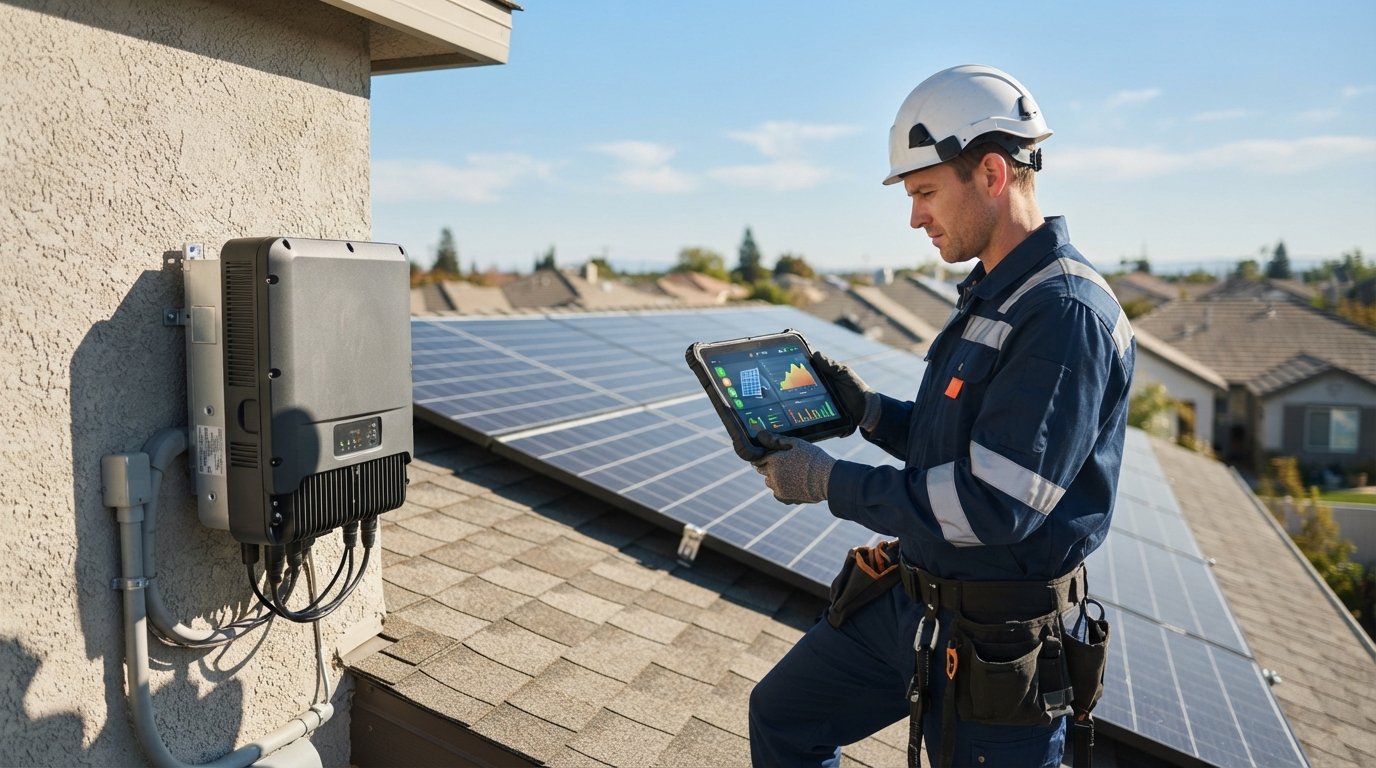
AI Predictive Maintenance for Solar Systems: Stop Downtime
AI predictive maintenance for solar systems preventing downtime keeps your panels producing at peak and protects your ROI. Here is how it works.

By Mason Carter
Learn more about Solar Panel Installation and Repair for guides, costs, and what to expect.
Compare Solar Panel Installation and Repair Pros Near You

Enter your ZIP code to compare top-rated local professionals and request free quotes.
Your solar panels are silently working all day, every day, turning sunlight into savings. But what happens when an inverter fails on a Tuesday afternoon, or a string of panels underperforms for weeks without any obvious sign? Most homeowners only discover a problem when they see an unusually high utility bill or a sudden drop in their monitoring app. By then, the system may have been losing energy, and money, for days or even weeks. That is where AI predictive maintenance for solar systems preventing downtime changes the game: it watches your equipment constantly, learns its normal behavior, and alerts you before a small fault becomes a costly failure.
Why Solar Downtime Is a Bigger Problem Than Most Owners Realize
Solar panels themselves are remarkably durable, often lasting 25 years or more with minimal degradation. The weak links are the other components: inverters, wiring, connectors, and monitoring hardware. A single inverter failure can cut your production by 50 to 100 percent until it is repaired or replaced. And repairs rarely happen the same day. Depending on where you live, scheduling a technician can take days, and if a replacement part is needed, it can take weeks.
During that downtime, you are still drawing power from the grid, often at peak rates. You lose the energy credits you would have earned, and your payback period stretches out. For businesses, the stakes are even higher: refrigeration, servers, and production lines may depend on consistent power, and unexpected outages can trigger equipment damage or operational delays. Even a 5 percent underperformance across an entire array can add up to hundreds of dollars per year in lost savings.
Traditional maintenance is reactive: you wait for something to break, then you fix it. Scheduled maintenance is better, but it still misses problems that develop between visits. Predictive maintenance flips the model. Instead of guessing when service is needed, you use data to know exactly when a component is starting to drift, overheat, or underperform. That is the core promise of AI-driven solar maintenance.
How AI Predictive Maintenance Actually Works
AI predictive maintenance combines three things: data collection, pattern recognition, and automated alerts. The system gathers data from your solar inverter, smart meters, weather stations, and sometimes additional sensors. It then uses machine learning models to compare current performance against what is expected, given the weather, time of day, and historical trends. When the actual output deviates from the predicted output beyond a certain threshold, the system flags an anomaly.
Here is a simplified breakdown of the process:
- Data ingestion: Inverter data, production logs, irradiance measurements, and temperature readings are streamed to a cloud platform.
- Baseline modeling: The AI learns your system's unique performance signature, including how it behaves on cloudy days, hot afternoons, and seasonal shifts.
- Anomaly detection: Real-time data is compared to the model. Small deviations trigger a warning; large deviations trigger an alert.
- Diagnosis and recommendation: The system suggests likely causes, such as a failing string, dirty panels, or a loose connector, and recommends specific actions.
Because the AI continuously learns, it gets better over time. It can distinguish between a passing cloud and a genuine fault, reducing false alarms. It can also correlate data across multiple systems, so if a particular inverter model tends to fail after three years in hot climates, the system can warn every owner with that model before the failure occurs.
For homeowners, this means fewer surprises and more uptime. For installers and service providers, it means they can schedule maintenance proactively, often fixing issues remotely before rolling a truck. That reduces costs and improves customer satisfaction.
Key Benefits: Preventing Downtime and Protecting Your Investment
The most obvious benefit is avoiding downtime, but the advantages go further. Predictive maintenance extends the life of your equipment by catching small issues early. It also improves safety: overheating connectors and arc faults can be detected before they cause fires. And it gives you concrete data to support warranty claims, since you can show exactly when performance began to degrade.
Here are the main benefits in practical terms:
- Maximized energy production: Every hour of downtime avoided is an hour of clean energy generated and savings earned.
- Lower repair costs: Fixing a minor issue early is almost always cheaper than replacing a failed inverter or repairing damaged wiring.
- Extended equipment lifespan: Inverters and other components last longer when they are not stressed by undetected faults.
- Better ROI: Consistent production means your payback period stays on track, and your long-term returns are more predictable.
- Peace of mind: You are not constantly checking your app or worrying about hidden problems.
These benefits compound over time. A system that runs at 98 percent availability instead of 92 percent can generate thousands of dollars in additional savings over its lifetime. That is why AI predictive maintenance is becoming a standard part of professional solar service agreements.
What Data Does an AI Maintenance System Need?
You do not need to install a laboratory's worth of sensors. Most AI predictive maintenance platforms work with data that is already available from your inverter and smart meter. The key is to have consistent, high-resolution data. Fifteen-minute interval data is common, but some systems use one-minute data for faster detection.
In addition to production data, weather data is crucial. The AI needs to know how much sunlight was available so it can separate weather-related dips from equipment faults. Temperature and humidity data help the model understand thermal stress. If you have a battery, its state of charge and cycle count are also valuable inputs.
For commercial systems, additional sensors may be used to monitor string-level current and voltage, which helps pinpoint the exact location of a fault. But for most residential systems, inverter-level data plus weather data is enough to detect the majority of common issues.
Real-World Applications: From Residential Rooftops to Utility Farms
Predictive maintenance is not just for large utilities. It is increasingly accessible to homeowners and small businesses. A typical residential system might use an AI-enabled monitoring platform that comes with the inverter or is added as a subscription. The platform sends push notifications or emails when it detects an anomaly, along with a recommended action.
For example, if the AI notices that one string of panels is producing 20 percent less than the others on a clear day, it might flag a potential shading issue, a dirty panel, or a failing optimizer. The homeowner can then check for obvious shading, clean the panels, or contact a professional if the issue persists. In many cases, the problem can be resolved without a service call, saving time and money.
On commercial and utility-scale systems, predictive maintenance is even more valuable. A 1 MW solar farm might have thousands of panels and dozens of inverters. Manually inspecting each component is impractical. AI can monitor the entire fleet, prioritize the most critical issues, and dispatch crews only where they are needed. This reduces O&M costs by 10 to 30 percent and increases uptime significantly.
If you are exploring how AI can optimize your entire home energy profile, including solar, battery, and EV charging, our guide on AI energy management systems explains how these technologies work together to cut bills and improve efficiency.
Choosing the Right AI Maintenance Solution for Your Solar System
Not all predictive maintenance platforms are created equal. Some are built into the inverter and offer basic alerts. Others are standalone systems that integrate with multiple brands and provide deeper analytics. When evaluating options, consider the following factors:
- Compatibility: Does the platform work with your inverter brand and model? Can it pull data from your smart meter?
- Data granularity: How often does it collect data? Higher frequency means faster detection.
- Alert quality: Does it provide actionable recommendations, or just raw data? Look for clear, specific alerts.
- Integration with service providers: Can it automatically notify your installer or a monitoring center?
- Cost: Is it a one-time purchase, a subscription, or included with your inverter? Factor in the long-term value.
For homeowners who want a hands-off approach, the best option is often a platform that connects directly with a vetted solar professional. That way, when an alert is triggered, the pro can diagnose and fix the issue without you having to coordinate multiple parties. SolarEnergy.ai connects homeowners with local solar specialists who can install, service, and monitor systems, including AI-driven maintenance. If you are ready to explore solar or upgrade your existing system, you can compare solar quotes from trusted installers in your area.
Before committing to any platform, ask for a demo or a trial period. See how the alerts look and whether they make sense for your system. A good predictive maintenance tool should feel like a helpful assistant, not a source of noise.
Steps to Implement AI Predictive Maintenance on Your Solar System
If you already own a solar system, you can start benefiting from predictive maintenance without replacing your entire setup. Here is a practical roadmap:
- Assess your current monitoring: Check what data your inverter already provides. Many modern inverters have built-in Wi-Fi and cloud monitoring.
- Choose a platform: Select an AI predictive maintenance platform that is compatible with your equipment. If you are unsure, consult a solar professional.
- Connect and configure: Link your inverter and any additional sensors to the platform. Set up your notification preferences.
- Establish a baseline: Allow the system to collect data for a few weeks to learn your system's normal behavior.
- Act on alerts: When you receive an alert, follow the recommended steps. For complex issues, contact a qualified technician.
- Review and optimize: Periodically review the reports to identify trends and adjust your maintenance plan.
For new solar installations, ask your installer about predictive maintenance options upfront. Some installers include a year of monitoring with the purchase, and you can extend it later. It is often easier and cheaper to integrate predictive maintenance from the start than to retrofit it later.
The Future of Solar Maintenance: What to Expect
AI predictive maintenance is still evolving. In the coming years, we can expect more seamless integration with smart home systems, so your solar system can coordinate with your battery, EV charger, and even your thermostat to optimize energy use and reduce strain on components. We will also see more prescriptive maintenance, where the AI not only detects a problem but also orders the replacement part and schedules the repair automatically.
Another trend is the use of digital twins: virtual replicas of your solar system that simulate performance under different conditions. This allows the AI to test scenarios and predict failures with even greater accuracy. As more data is collected across millions of systems, the models will become more robust, catching rare faults that were previously undetectable.
For homeowners, this means solar will become even more reliable and hassle-free. The days of climbing on the roof to check for issues will fade. Instead, your system will tell you when it needs attention, and often, a remote fix or a quick visit will be all that is required.
Investing in AI predictive maintenance is not just about avoiding downtime today. It is about protecting your solar investment for decades, ensuring that every ray of sunshine is converted into savings. Whether you are a homeowner with a small rooftop array or a business with a large commercial installation, the technology is available and affordable. By taking a proactive approach, you can maximize your energy independence and enjoy the full financial and environmental benefits of solar power.
To get started, reach out to a trusted solar professional who can help you evaluate your options and implement a predictive maintenance plan that fits your needs. With the right tools and support, your solar system can run smoothly for years to come.