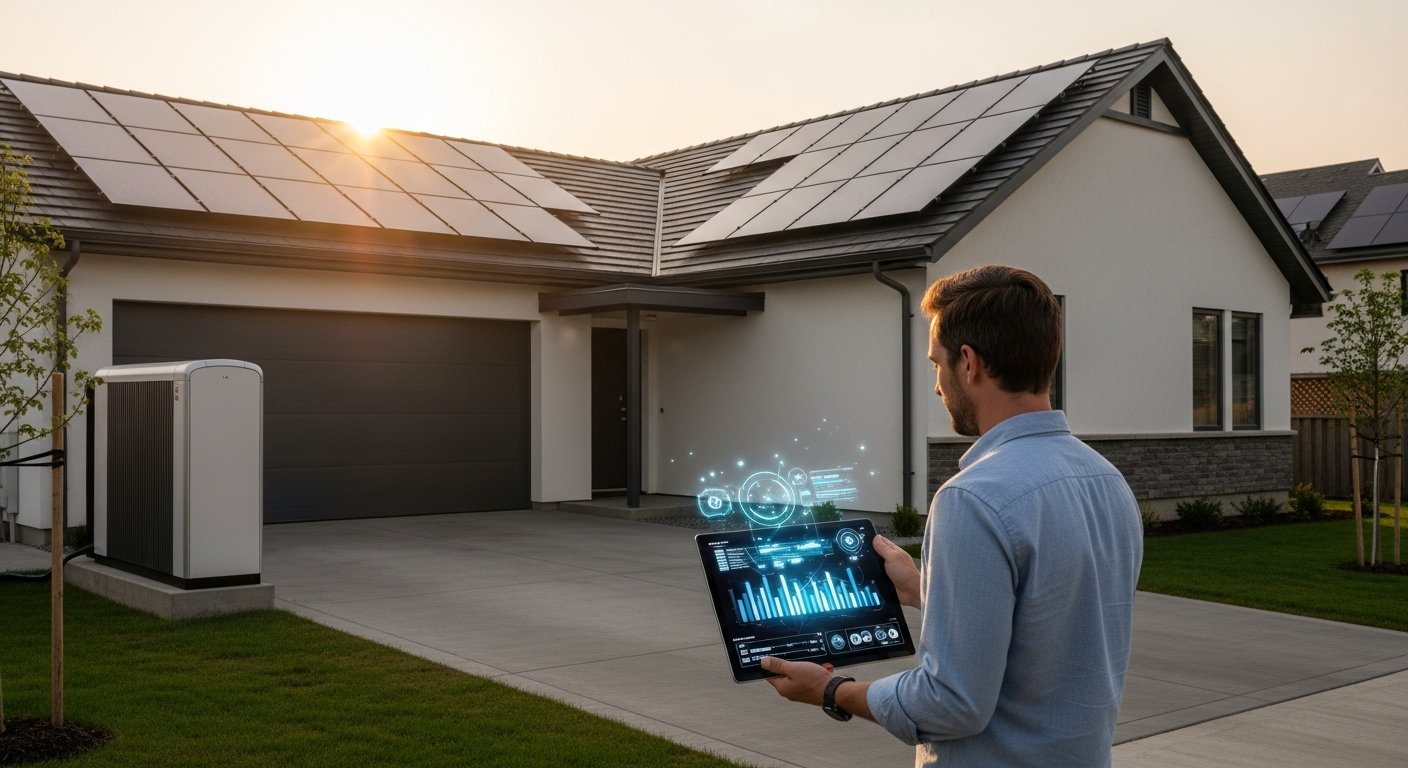
AI in Solar Energy: Maximize Savings with Smart Tech
AI in solar energy optimizes panel performance and battery storage, helping homeowners slash electricity bills and achieve greater energy independence.

By Owen Phillips
Learn more about Solar Panel Installation and Repair for guides, costs, and what to expect.
Compare Solar Panel Installation and Repair Pros Near You

Enter your ZIP code to compare top-rated local professionals and request free quotes.
Solar energy has long been a cornerstone of renewable power, but its full potential remains untapped without intelligent management. The sun is abundant, yet weather patterns, panel degradation, and fluctuating energy demand create inefficiencies. This is where artificial intelligence steps in, transforming static solar arrays into dynamic, self-optimizing systems. By analyzing vast streams of data, AI can predict output, adjust panel angles, manage battery storage, and even schedule heavy appliance use to match peak generation. The result is not just cleaner energy, but a smarter, more cost-effective approach to powering homes and businesses. For homeowners already invested in solar, AI represents a powerful upgrade that can further reduce electricity bills and shorten payback periods.
Understanding AI in Solar Energy
Artificial intelligence in the solar context refers to machine learning algorithms and data analytics applied to photovoltaic systems. These systems collect information from sensors, weather forecasts, historical production data, and grid pricing signals. AI then processes this data to make real-time decisions or long-term predictions. For example, a cloud passing overhead might trigger a micro-adjustment of panel tilt or a temporary shift to battery power, all without human intervention. This level of automation is becoming essential as solar installations grow more complex and as homeowners demand greater energy independence.
One of the most immediate benefits of AI in solar energy is its ability to eliminate guesswork. Instead of relying on static estimates, a smart system learns your household's consumption patterns, weather trends, and utility rate structures. It then optimizes when to draw from panels, when to store excess power, and when to sell back to the grid. This dynamic approach can increase overall system efficiency by 10 to 20 percent, according to industry studies. In our guide on how to use AI for solar energy to slash your electric bill, we detail specific strategies that leverage these algorithms for maximum savings.
How AI Optimizes Solar Panel Performance
Solar panels operate at peak efficiency only when they are perfectly aligned with the sun. Traditional fixed mounts are a compromise; single-axis or dual-axis trackers improve output but add mechanical complexity and cost. AI-powered trackers take a different approach. Instead of following a simple time-based schedule, they use real-time light sensors and weather data to anticipate the sun's position and adjust accordingly, even accounting for seasonal variations and temporary shading from trees or buildings.
Beyond physical tracking, AI also optimizes electrical performance. Micro-inverters and power optimizers generate streams of data that AI can analyze to detect underperforming panels. A single shaded or dirty panel can drag down an entire string, but AI-driven systems can identify the issue and either bypass the faulty panel or alert the homeowner to schedule cleaning. This kind of predictive maintenance prevents small inefficiencies from becoming costly problems. For a deeper look at the tools available, our article on AI tools for solar energy: save more on your electric bill reviews several software and hardware solutions currently on the market.
AI for Predictive Maintenance and Diagnostics
Routine maintenance is a fact of life for solar owners. Panels need cleaning, inverters can fail, and wiring may degrade. AI shifts the model from reactive to proactive. By continuously monitoring voltage, current, and temperature across each component, machine learning models can spot anomalies that precede failures. For instance, a gradual drop in output from one panel string might indicate a developing hot spot or a loose connection. The system flags it early, allowing you to address the issue before a costly breakdown occurs.
This capability is especially valuable for large commercial installations, where downtime translates directly to lost revenue. On a residential scale, it means fewer surprise repair bills and a longer lifespan for your equipment. Some AI platforms even integrate with drones or cameras to inspect arrays automatically, identifying cracks, soiling, or vegetation overgrowth. The result is a solar system that essentially oversees its own health, giving homeowners peace of mind.
AI in Energy Storage and Battery Management
Batteries are the natural partner to solar panels, storing excess energy for use at night or during cloudy days. Yet batteries are also expensive and have finite cycle lives. AI optimizes charging and discharging to maximize both savings and battery longevity. For example, the system might charge the battery during off-peak solar hours and discharge during peak utility rates, even if that means sending solar power to the grid instead of the battery at midday.
More advanced AI systems also incorporate time-of-use rate plans and real-time grid pricing. If the utility offers lower rates for off-peak consumption, the AI can schedule heavy loads like electric vehicle charging or pool pumps to run when solar production is high. Conversely, if a storm is forecast, the system might conserve battery charge to ensure you have backup power during an outage. This level of intelligence turns a simple battery into a smart energy hub that actively minimizes your electricity costs.
Financial Benefits: Lower Bills and Better ROI
The ultimate goal of AI in solar energy is to improve the economics of your investment. While solar panels alone reduce your reliance on the grid, AI amplifies those savings. Consider a typical home with a 10 kW system. Without AI, the homeowner might save around $1,200 per year on electricity. With AI-driven optimization, that figure could rise to $1,500 or more, representing a 25 percent increase in savings. Over the 25-year lifespan of the system, that difference amounts to thousands of dollars.
Additionally, AI can help you take full advantage of net metering policies and federal or state incentives. By precisely timing your grid exports to coincide with high buyback rates, you can earn more from surplus power. Some systems even allow you to participate in demand response programs, earning credits for reducing consumption during peak events. All of this boosts the return on investment, making solar an even more attractive financial decision.
Here are some key financial advantages that AI brings to solar owners:
- Increased self-consumption of solar energy, reducing grid purchases
- Time-of-use optimization to avoid high-rate periods
- Predictive maintenance that prevents costly repairs
- Better battery management to extend cycle life and maximize savings
- Automated participation in utility incentive programs
Each of these benefits contributes to a lower overall cost per kilowatt-hour and a faster payback period. When combined, they can make a solar system cash flow positive years earlier than a non-optimized setup.
Implementing AI in Your Solar System
Adding AI to an existing solar installation is more straightforward than many homeowners expect. The first step is to ensure your system has monitoring capabilities. Most modern inverters and micro-inverters come with built-in communication modules that can connect to cloud-based AI platforms. If you have an older system, you can retrofit it with smart sensors or a third-party monitoring gateway.
Next, choose an AI solution that matches your needs. Some options are software-only, running on a smartphone app that provides recommendations and alerts. Others are hardware-based, such as smart inverters or battery controllers with integrated AI. For homeowners considering a new installation, many solar companies now offer AI-ready packages. As discussed in solar energy automation: cut bills and gain energy freedom, automating your system with AI can dramatically simplify energy management.
Finally, understand that AI requires data. The system will learn over time, so initial settings may be conservative. Within a few weeks of operation, the algorithms will adapt to your patterns and start delivering optimal performance. Some platforms also allow you to set priorities, such as maximizing savings versus minimizing carbon footprint, giving you control over your energy goals.
The Future of AI and Solar Energy
The integration of AI with solar energy is still in its early stages, but the trajectory is clear. We are moving toward fully autonomous energy homes where solar panels, batteries, electric vehicles, and smart appliances communicate in real time. AI will manage this orchestra, balancing generation, storage, and consumption with minimal human input. Grid operators are also exploring AI to integrate millions of distributed solar systems, turning them into a virtual power plant that can stabilize the entire network.
Emerging technologies like computer vision will enable drones to inspect solar farms automatically, while natural language processing will allow homeowners to ask their system questions like, "How much energy did I produce yesterday?" The convergence of AI and solar is not just a trend; it is a fundamental shift in how we produce and consume electricity. For those who adopt early, the rewards are lower bills, greater resilience, and a cleaner planet.
In summary, AI in solar energy is a game-changer for anyone looking to get the most out of their photovoltaic investment. From real-time optimization to predictive maintenance and smart battery management, the benefits are tangible. Whether you are a homeowner seeking to reduce monthly costs or a business aiming for energy independence, integrating AI into your solar system is one of the smartest moves you can make. The technology is available, the savings are proven, and the future is bright.
Learn more about Solar Panel Installation and Repair for guides, costs, and what to expect.
Compare Solar Panel Installation and Repair Pros Near You
Enter your ZIP code to compare top-rated local professionals and request free quotes.