2026 Commercial Solar Savings: Proven Case Studies
Real commercial solar energy savings case studies from 2026 show how businesses cut energy costs by up to 60% and achieved payback in under seven years.

By Mason Carter
Learn more about Solar Panel Installation and Repair for guides, costs, and what to expect.
Compare Solar Panel Installation and Repair Pros Near You

Enter your ZIP code to compare top-rated local professionals and request free quotes.
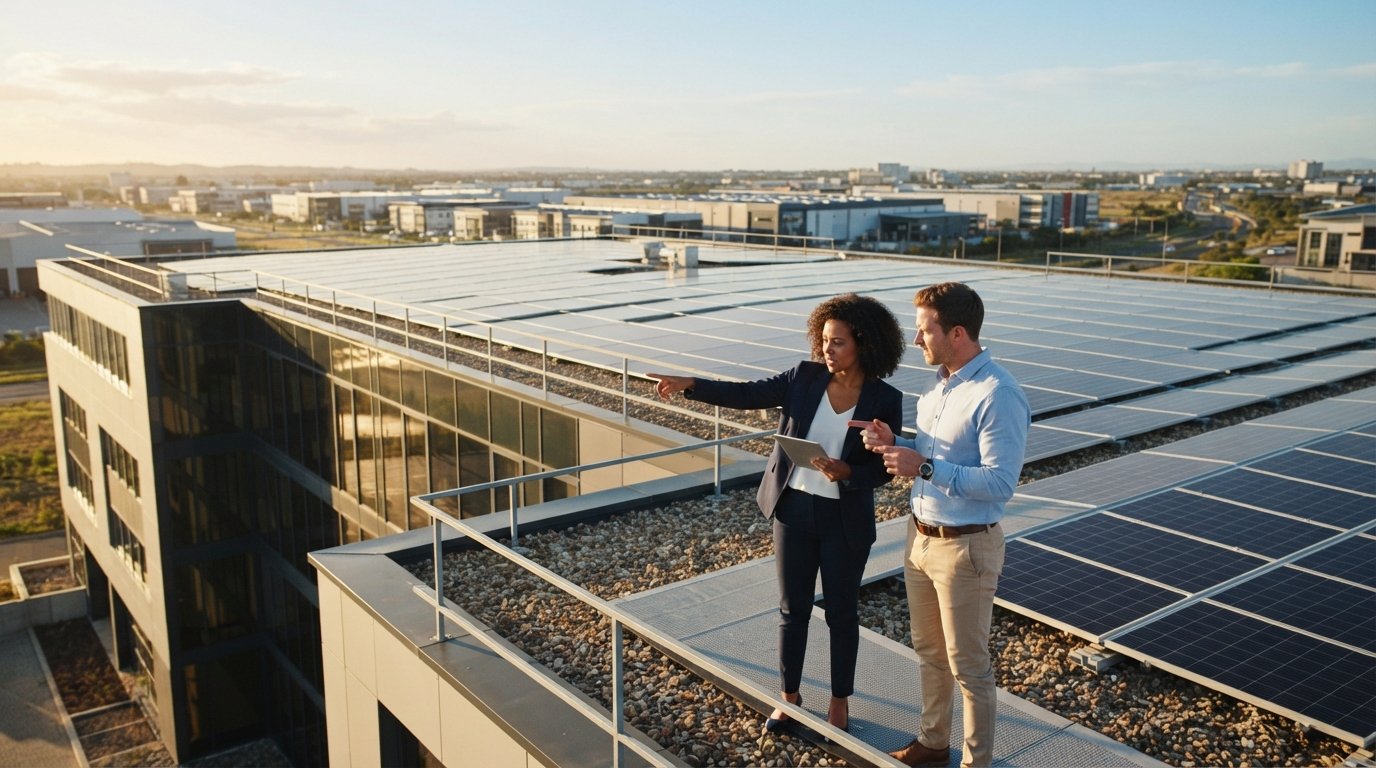
For business owners, the bottom line is everything. Energy costs represent one of the largest and most volatile operational expenses, often fluctuating without warning and eating into hard-earned profits. In 2026, the conversation has shifted from whether solar is a viable option to how quickly it can transform a company's financial health. Real-world data from businesses of all sizes now provides a clear, compelling picture: commercial solar is no longer just an environmental statement, it is a strategic financial move with measurable returns. This article examines tangible commercial solar energy savings case studies 2026 to demonstrate how companies are slashing overheads and gaining a competitive edge.
These are not theoretical projections. They are accounts of actual installations, with real kilowatt-hour production data, utility rate comparisons, and bottom-line results. By analyzing these examples, you will see how different industries, from manufacturing to retail, are leveraging the sun to stabilize their energy budgets. We will break down the financial mechanics, the operational benefits, and the critical decision points that lead to maximum return on investment. This is about giving you a roadmap, backed by evidence, to make an informed choice for your business.
Why 2026 is the Pivotal Year for Commercial Solar
The economic landscape for commercial solar in 2026 is uniquely favorable, a convergence of technology, policy, and market forces that has never been seen before. The cost of photovoltaic panels has continued its historic decline, while efficiency rates have reached record highs. This means more power is generated per square foot of roof space, making solar viable for a broader range of commercial properties, including those with limited roof area. Simultaneously, the federal Investment Tax Credit (ITC) remains a powerful financial catalyst, offering a significant direct reduction on the total system cost.
Beyond the federal level, many states and municipalities are enhancing their own incentive programs, from performance-based rebates to expedited permitting processes. This combined support drastically shortens the payback period. In many regions, the levelized cost of solar energy is now below the retail price of grid electricity, meaning that every kilowatt-hour your business generates is an immediate saving. This is not just a trend; it is a fundamental shift in energy economics that rewards early adopters. The risk of doing nothing is now greater than the risk of investing, as your competitors who switch early gain a permanent cost advantage.
Case Study 1: A Mid-Size Manufacturer Cuts Energy Costs by 45%
Consider the case of a 150,000-square-foot metal fabrication plant in Ohio. Their energy-intensive machinery, including high-powered lasers and welding equipment, led to annual electricity bills exceeding $600,000. The facility's flat, unshaded roof was an ideal solar asset. In early 2026, the company decided to invest in a 1.2-megawatt (MW) rooftop solar array. The project was financed through a commercial Power Purchase Agreement (PPA), which required zero upfront capital.
The results were immediate and substantial. In the first six months of operation, the system generated over 800,000 kWh of clean energy, offsetting approximately 45% of the plant's total electricity consumption. This directly translated to a monthly cost reduction of around $22,000, based on their blended utility rate of $0.14/kWh. The PPA locked in a lower, fixed rate for the solar energy, providing a hedge against future utility rate increases. This stability has allowed the company to forecast energy costs more accurately and reallocate the savings towards new equipment and workforce training.
Financial Breakdown and ROI Analysis
The financial structure of this deal is instructive. With a PPA, the solar provider owns and maintains the system, and the manufacturer simply purchases the power generated at a predictable rate. This eliminates the need for a large capital outlay and transfers performance risk to the provider.
- Immediate Savings: Lower per-kWh cost compared to the utility, resulting in instant monthly savings.
- No Upfront Investment: The installation and maintenance costs are borne by the third-party owner.
- Predictable Energy Budget: Fixed or slowly escalating PPA rates make financial planning more accurate.
- Operational Efficiency: Solar panels also provide a cooling effect on the roof, potentially reducing HVAC loads in the summer.
Beyond direct energy savings, the company is now exploring battery storage to capture excess solar power during peak production hours and use it during the evening when utility rates are higher. This next step, often called load shifting, is the natural progression for businesses that want to maximize their energy independence. The success of this project has not only improved the company's financial standing but also enhanced its brand reputation as a sustainable manufacturer, which has helped in attracting environmentally conscious clients.
Case Study 2: A Retail Chain Achieves 10-Year Payback with Net Metering
A regional grocery store chain with 15 locations across Virginia and Maryland took a different approach. Instead of a third-party PPA, they opted for a direct purchase of solar systems for their largest stores, taking full advantage of the 30% federal tax credit. Each system was sized to offset approximately 80% of the store's annual electricity usage, which is dominated by refrigeration and lighting. The average system size was 350 kW, costing about $700,000 before incentives.
After the federal tax credit and state-level incentives, the net cost was reduced to roughly $450,000 per store. The stores are located in areas with favorable net metering policies, which allow them to send excess solar power back to the grid in exchange for credits on their utility bill. During sunny days, the stores often produce more power than they consume, building up credits that are used during the evening and on cloudy days. This has effectively eliminated their electricity bills for most of the year.
The company's analysis shows a simple payback period of just under 10 years on their investment. This is a conservative estimate, which factors in system degradation over time and a modest annual utility rate increase of 2.5%. After the payback period, the electricity from the solar arrays is essentially free, significantly boosting the company's profit margins for the remaining life of the system, which is expected to last 30 years or more. This long-term perspective turns solar from a simple cost-saving measure into a profit-generating asset. For a business with tight margins like a grocery store, this is a transformative advantage.
One of the key drivers of their success was a meticulous site assessment. They used advanced modeling software to predict shading patterns and optimize panel placement for maximum yield. They also invested in high-quality microinverters, which optimize power output at the individual panel level, ensuring that the performance of one panel does not affect the rest of the string. For businesses considering a similar path, leveraging a free solar savings calculator can provide a preliminary estimate, but a professional site survey is essential for accuracy.
Case Study 3: A Logistics Warehouse Maximizes ROI with Battery Storage
In California, where time-of-use (TOU) rates are exceptionally high during the late afternoon and early evening, a logistics and distribution company found that solar alone was not enough to maximize savings. Their 500,000-square-foot warehouse had ample roof space for a 1.5 MW solar array, but their peak energy demand occurred after the sun had set, when they were loading trucks for overnight deliveries. Their solution was to pair the solar array with a 2 MWh battery energy storage system.
The strategy is known as 'arbitrage'. Solar panels charge the batteries during the day when the sun is strong and utility rates are low. Then, during the peak demand period from 4 PM to 9 PM, the facility draws power from the batteries instead of the grid, avoiding the exorbitant TOU rates. This system also provides backup power, protecting their critical operations from grid outages, which are increasingly common due to extreme weather events. The company estimates that the combination of solar and storage has reduced their annual energy costs by over 60%.
The financial case was compelling. The investment in storage added about $800,000 to the project cost, but it unlocked an additional $150,000 in annual savings by shifting load away from the peak demand window. This reduced the overall payback period for the combined system to just over seven years. Furthermore, the company was able to participate in demand response programs, earning additional revenue by allowing the utility to draw on their battery reserves during grid stress events. This revenue stream further improves the ROI and turns their energy system into an active source of income.
This case clearly demonstrates that the most advanced commercial solar strategies in 2026 are not just about generating power; they are about intelligent energy management. Understanding your own load profile is the key to designing a system that delivers the highest possible financial return. A system that is optimized for your specific operational hours and utility rate structure is always more valuable than a one-size-fits-all solution. As you consider your own energy strategy, it is helpful to consult resources that explain how AI can further optimize these systems, as seen in our analysis of AI solar energy case studies.
Overcoming Common Barriers to Adoption
Despite the clear financial benefits, many businesses still hesitate. The most common barriers are upfront costs, perceived complexity, and a lack of internal expertise. For cost concerns, the PPA model offers a zero-down solution. For complexity, reputable solar installers provide turnkey services, managing everything from design and permitting to installation and grid connection. They also offer ongoing monitoring and maintenance. For businesses that lack expertise, an energy consultant or a partner platform like FreeSolarPowerQuotes can simplify the process of comparing vetted installers and financing options, ensuring you get the best possible system for your needs.
Another concern is the longevity and reliability of the system. Modern solar panels come with performance warranties of 25 to 30 years, and inverters typically have warranties of 10 to 15 years. Reputable installers also offer workmanship guarantees, providing peace of mind. It is also wise to conduct a thorough review of your existing electrical infrastructure to identify any necessary upgrades before installation, which prevents unexpected costs and delays. The key is to work with experienced professionals who can navigate these challenges and deliver a system that performs as promised. The technical and financial risks are manageable and are far outweighed by the long-term benefits of energy independence and cost certainty.
Finally, consider the effect on property value. A commercial property with a solar energy system often has a higher market value and is more attractive to tenants looking to reduce their own operating costs. In many markets, buildings with green certifications and renewable energy sources command higher rents and have lower vacancy rates. This adds another layer to the financial return on your solar investment, making it a true asset to your real estate portfolio.
Key Takeaways for Your Business in 2026
As the case studies above show, there is no single 'right' way to adopt commercial solar, but there are clear principles for success. The first step is to understand your own energy profile. Analyze your utility bills for the past 12 months to understand your consumption patterns, peak demand times, and current rate structure. This data is the foundation for any accurate financial model. Next, set clear financial goals, whether it is a target payback period, a specific percentage reduction in energy costs, or a desire for fixed, predictable energy prices.
With your goals in mind, you can explore the different financing structures. A direct purchase maximizes long-term ROI and provides the greatest benefit from tax incentives. A PPA or solar lease eliminates upfront costs and shifts operational risk to a third party. The right choice depends on your business's capital situation, tax liability, and strategic priorities. Finally, do not underestimate the importance of a high-quality installation. The efficiency of your system over its lifetime is directly tied to the quality of the components and the craftsmanship of the installation. Investing in a reputable installer is not an expense; it is an investment in your system's performance.
Another element to consider is the integration of your solar system with other energy-efficient technologies. Upgrading to LED lighting, installing smart thermostats, and optimizing your HVAC systems can reduce your overall energy demand, meaning your solar array can cover a larger percentage of your total usage. This synergistic approach amplifies your savings and shortens your payback period further. The most successful projects view solar not as an isolated project, but as a key part of a comprehensive energy management strategy.
In 2026, the decision to go solar is a clear-cut business decision. The data from commercial solar energy savings case studies 2026 is overwhelming. Companies across every sector are reducing their operating costs, protecting themselves from volatile energy prices, and gaining a competitive advantage. The technology is reliable, the financial incentives are strong, and the path to implementation is well-established. The only question is not whether to invest in solar, but when. Delaying means continuing to pay higher utility rates and forgoing the savings and revenue potential that solar offers. The future of energy is decentralized, clean, and increasingly affordable. Making the switch now positions your business to thrive in that future.